

בקצרה: הנקודות החשובות
The Common Misconception About Stomach Acidity
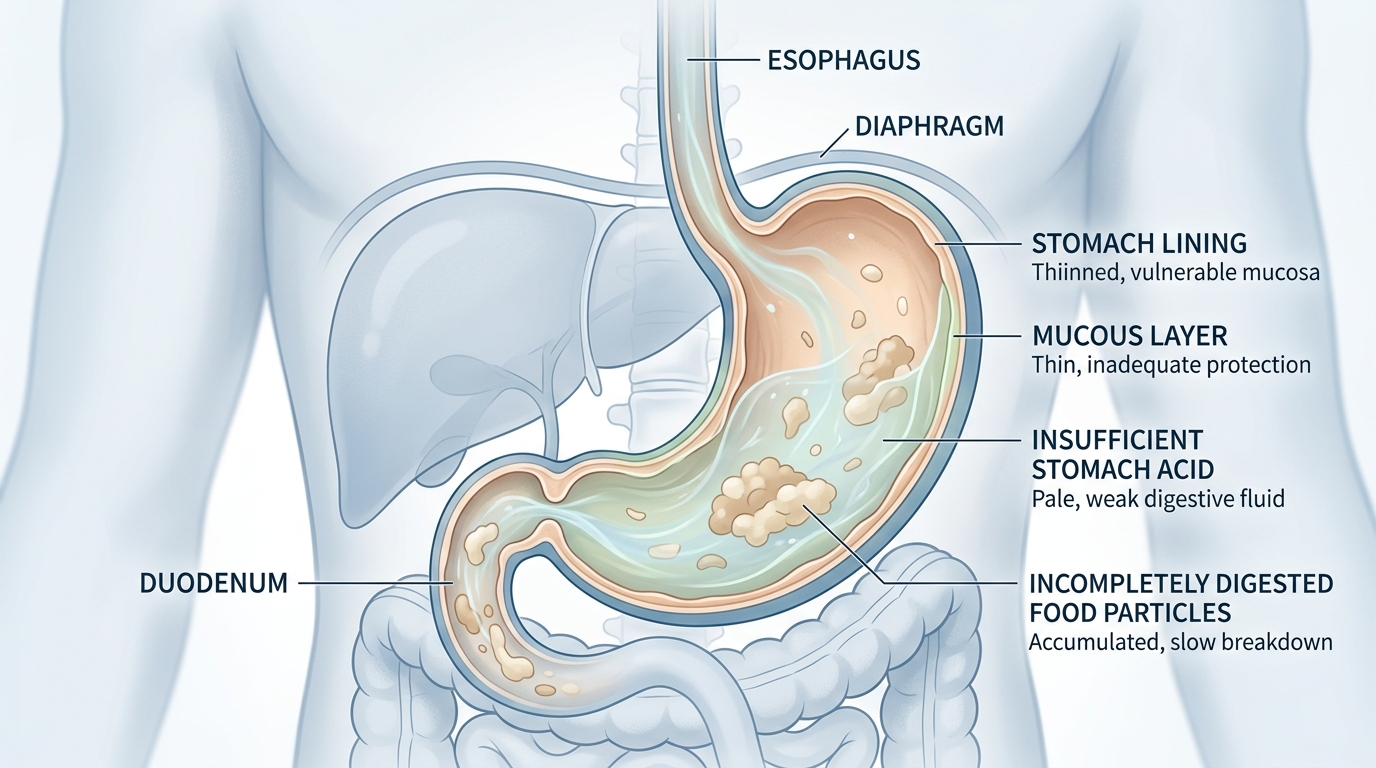
When you experience heartburn, indigestion, or reflux, it’s natural to assume the problem is too much stomach acid. However, clinical experience often shows the opposite is true: the most common issue is actually a lack of sufficient stomach acid, a condition known as hypochlorhydria (meaning the stomach’s pH is too high).
Your stomach is designed to be one of the most acidic environments on the planet. This powerful acid is essential for breaking down proteins into usable building blocks for your body. When acid levels are too low, proteins are not digested properly. Instead, they begin to putrefy as they move through the digestive tract, releasing numerous toxins and contributing to bloating, gas, and discomfort.
What Causes a Weakened Stomach Environment?
You might wonder, if the stomach is built for high acidity, why do people experience burning pain? The issue is rarely that the acid is “too strong,” but rather that the stomach’s protective lining has been compromised. A healthy stomach secretes a thick layer of mucus that shields its walls from the powerful hydrochloric acid.
This protective barrier can be weakened by several factors, including:
- Chronic Stress: Prolonged stress can disrupt the body’s ability to maintain and repair the stomach lining.
- NSAID Use: Long-term consumption of non-steroidal anti-inflammatory drugs (NSAIDs) like aspirin significantly reduces the body’s ability to secrete the protective mucus, leaving the stomach lining vulnerable.
The Problem with Conventional Antacid Treatments
For those suffering from gastritis, stomach ulcers, or chronic heartburn, antacids may seem like a logical solution. However, they are only a temporary fix that masks the symptoms without addressing the root cause. By neutralizing or blocking stomach acid, they can worsen the underlying problem of poor protein digestion.
Furthermore, recent studies have raised concerns about the long-term use of these medications, especially proton pump inhibitors (PPIs). Research has linked prolonged use to a significantly higher risk of heart problems and other health issues. Suppressing acid production is not a sustainable solution for restoring digestive health.
A Functional Approach to Restoring Stomach Health
According to George Goodheart, a pioneer in the field of functional health, stomach issues should be a primary focus of treatment. He often stated that even when other health problems seem more urgent, if a stomach issue exists, it must be addressed from the beginning for true healing to occur.
Restoring proper stomach function involves providing the body with the right building blocks. Key nutrients are essential, with zinc being one of the most important for healthy acid production. Additionally, incorporating bitters (bitter-tasting herbs) can help stimulate the body’s natural digestive processes.
Identifying the precise cause and the most effective support for an individual is key. While not yet scientifically validated, clinical experience has shown a specific diagnostic method to be highly effective when applied correctly. This approach allows us to identify the root causes of the problem and determine which supplements or herbs will be most effective for you personally. Every person is unique, and understanding how your diet, supplements, and lifestyle affect your body is the foundation of personalized health. The goal is to empower you with the knowledge to give your body what it needs to function at its best.